%402x.svg)
Spotlight on Purpose-Led Founders: A conversation with Jarvis Smith, founder of My Green Pod and the P.E.A. Awards
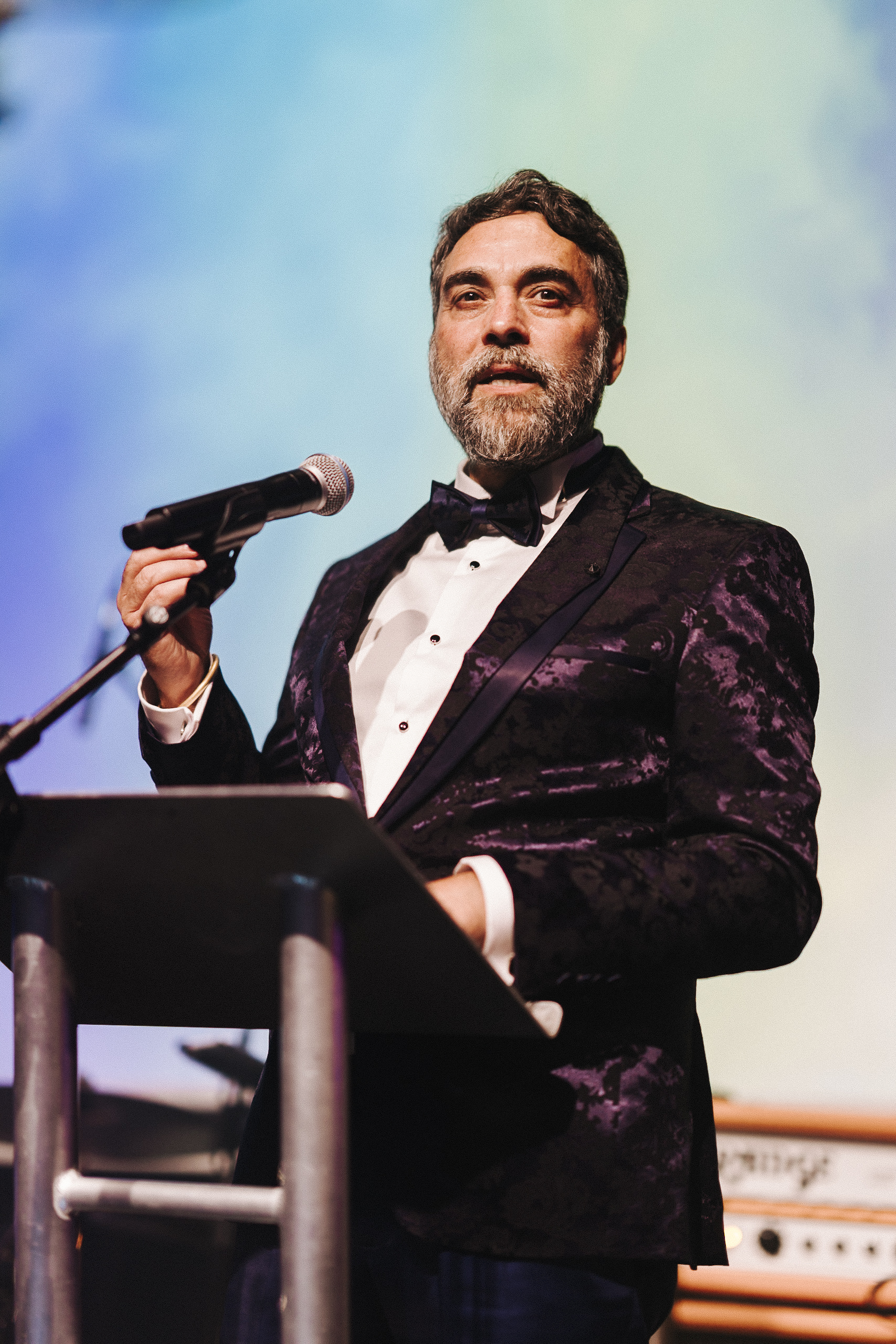
About Jarvis:
Jarvis Smith is a modern mystic on a mission. As founder of the P.E.A. Awards and My Green Pod, he fuses ancient wisdom with contemporary values, awakening ethical business and soulful living. A profound initiation on Channel 4’s Dumped in 2007, paired with 14 year’s Shamanic training, sparked his calling: to shift humanity from unconscious consumption to sacred reciprocity with the Earth.
Together with his wife Katie Hill, Jarvis created My Green Pod, an online sanctuary where commerce meets consciousness. Their work echoes through partnerships with major brands, not for profit but for planetary healing. In 2022 Jarvis began hosting the ‘Lean into clean’ UK Health Radio show and began hosting voices like Scilla Elworthy and Jonathan Porritt in spirited dialogue.
Jarvis is more than a change-maker, he’s a channel, activating a movement where every choice becomes a prayer, every act a seed of regeneration. A proud OMMMbassador, Jarvis invites us to walk a path of purpose.
Lucy: Let’s go back to the beginning. Can you tell me the story of how My Green Pod came about?
Jarvis: My Green Pod was actually a reincarnation of a previous magazine, Green Magazine, that I was doing in 2006 in the national newspaper advertising arena. Back at that time, I met some TV researchers and producers and they thought I was an interesting character, they said they would keep me in mind for a TV show. I got a call and was invited to be part of a TV show in an extreme environment for an eco-documentary. We thought we were going to somewhere like the Arctic, but we had to live on a landfill in Croydon for 3 weeks with absolutely nothing! We had to build somewhere to go to the toilet, somewhere to sleep, we eventually made a shower too. The show was called “Dumped” and it aired in 2007. The whole experience was very impactful for me.
In the third week, after we had built a home, the local dustbin truck came to our landfill site and dumped rubbish on top of our site. We had to sort through the rubbish, to decide what should go to landfill and what should be recycled. After twenty minutes, I felt physically sick, like the most awful hangover you can imagine. I had trained with a female Shaman; I knew how to release toxicity: I lay on the floor and took a very deep breath in- as I did that, I felt like I was being hit by lightning. I heard a voice say to me, “How you are feeling now is how I am feeling”. In that moment, I committed to my life’s work to educating people about climate change.
Once we’d finished filming the TV show, I said to my publishers, I want to set up a lifestyle magazine. We had an “At home with…” series at the time, so I launched “At home with Rob Holdway” - he was the presenter of Dumped. In 2008 I moved to National Geographic and launched the “Green” supplement. But all of the subscribers went to National Geographic, and the business model wasn’t sustainable, so then I launched Green with The Guardian until 2013. At that time the Green Party was becoming more popular, so we changed the magazine’s name so it didn’t seem associated with the political party. That’s when it became My Green Pod. It was part of Guardian until 2020 when we became fully independent. I couldn’t understand why this news about climate and sustainability wasn’t on the front page of every newspaper, so I had to create it.
How did your personal purpose flow into the vision and strategy for My Green Pod?
That experience that happened when I was filming Dumped was life-changing. My wife had been pregnant when I was on the show, and my oldest daughter was born the year it aired. I knew I had to create a better world for my own kids, and every child on the planet. That is my personal purpose: both a micro purpose and a macro purpose.
The whole word purpose has become a bit “buzzy” in recent years. To begin with, I didn’t really know it was a purpose. It felt like a mission to begin with, something beyond me. Now its evolved to be a purpose for the planet. Purpose is aligned with values and how you want to show up in the world, what is important is being the best version of myself.
What are your thoughts on how purpose helps to differentiate your business from competitors?
Firstly, we have a set of values that we never sell out. We want to offer the best solutions that people can find- we recommend products that enable people to be part of the solution, not the problem. It shows up in our business because we only work with organisations that meet our criteria.
Secondly, we actually meet every founder in person or online, and we can quickly sniff out greenwashing that way. We have a purpose and we create a mycelium network of purposeful beings with the people we work with. We are mindful about working only with people who align with what nature is asking of us.
Thirdly, we are ethical in our operations, ethical banking, ethical pensions, we only use the best materials, we plant trees to offset emissions. We always try and give back to nature.
My Green Pod is a family-run business. In your opinion, is there something about the nature of family-run and the concept of legacy, that makes it easier to embrace purpose?
I can only answer from my perspective, but it’s absolutely a mission for my wife and I that we live true to our purpose to give back to nature. If you are running your own business, it’s much easier to be purposeful because you own your own roadmap. Working for someone else, it can be more difficult if you don’t have full control.
But having said that, there are many cases of individuals within businesses, that we recognise in our P.E.A. Awards, where a single person has changed the DNA of the organisation. But it’s hard to do, especially without the C-suite on your side!
How do you think about who your stakeholders are?
For My Green Pod, we are very clear on who our stakeholders are and number one is nature, number two is humans. We don’t call them consumers because we don’t like that word: it’s citizens who want to live better through how they spend.
Then it’s advertisers, but we call them partners, and we ask ourselves, whose story do we want to tell to our network? I think about it in terms of scope 1, scope 2; our supply chain, our team, our investors, and then scope 3 like who we bank with, the marketing software we use etc. We chose whatever is most purposeful. We turned down big investment from investors who were greenwashing. It worked out, because we got a lovely investor through the Yeo Valley investment, Yeo Ventures.
With the P.E.A. Awards, we consider the venue, the corporate sponsors, and so on. We have always worked with companies that were very clearly aligned. Sometimes it’s a very hard decision when it comes to sponsors, but we really try and align.
What does it look like in practice to have nature as your number one stakeholder?
The engagement with nature comes in many ways. I trained with a female Shaman for 15 years in the art of listening to nature. I’ve learned to disconnect from the noise that tries to get our attention, how to change my pace back to the natural rhythm. You can then hear the natural vibrations that nature is sending to us. I began to literally hear the waves and the winds speaking to me. I have been trained with a unique skillset to speak to nature.
In indigenous principles, when you take water or resource from the natural earth, you offer thanks. Every single business gets profit from nature. The big problem is that we take and take and don’t give back. At My Green Pod, we pride ourselves on asking nature, and supporting nature. Most people are not prepared to put in time and training to speak with nature but my wife and co-founder Katie is equally tuned in in her own way. I consciously make sure I am aligned with nature everyday, so it becomes the norm.
When the pandemic came about, a couple of neighbours were very sick. I remember the weather was beautiful and I remember picking up on nature’s energy; the fear was driving energy to Covid. I was disturbed by this- I saw nature as a reflection of humanity. I asked nature, I said, “what’s the pandemic all about?” She said, “I have put this virus out so you can work through your fear”. It’s a conscious organism that is part of an evolutionary plan. When I got that information, we decided not to do vaccinations. I believed it was something we needed to go through to evolve.
I’ve recently become involved in some mining work in Uganda, where I am known as the “ESG guy”. I was conflicted in getting into the mining industry, given it equates to digging into the earth to take precious resources out to create a profit. I sat and mediated on it, and nature said to me, “it’s better for you to be involved in it, than someone else doing it, because you will do it better. You sent yourself this gold from another life so that you can do something in this life.”
What does that mean, “doing it better” in the context of mining?
It’s about looking at the kindest way to mine the earth without doing long term damage. There are mines in Norway, Finland that are very sustainable. It’s also about using newer technology that does less damage to the earth. We built really good relationships with them to make sure they benefit too. It will hopefully be the new way that other mining companies will want to copy in the future. We’re already talking to groups across the industry about the new technology.
You’ve shared how purpose is central to the strategy of My Green Pod. How does it show up in your leadership?
I’ve got three personal values: sustainable, spiritual and social; these are the three levels of impact I want to have. Spirituality is important because it’s the most natural, simplest way to live on this earth. Accept that we are a soul, an energy force. We don’t die, just the body does. I am deeply connected with this way of thinking - partly my Indian roots and lineage, partly my regular practice. Humans have been programmed to be in constant relationship with the everyday world, but very few humans trust their relationship within. Most people are addicted to the outside world. I counterbalance all the “outside” world with the inner work- when you are connected with everything you can feel, the world becomes more of a playground, more paradoxical. It becomes a system – a level of connectedness. Science tells us that the world we live in is built on information, if you can change the information, you can change the world. Spiritually, the spiritual hologram is only created through the way we think. Social media is predominately more negative than it is positive. That is the world we are creating. I know I have the power to create the world we live in. We are doing it by awakening consciousness. It’s a massive struggle, we are constantly fighting against a fear-based machine.
What are your hopes and fears for the future, considering the major changes humanity is facing in the next few years with the rapid advancement of AI and emerging technologies?
What nature is telling me, is if we can raise the frequency to gratitude, nature will fix it in a breath. That “breath” could be a few years, it could be 50 years. I am constantly filled with hope. I believe it may be important for us as humanity to get to as close to extinction as possible before we get that epiphany moment. Some people have had an epiphany moment, but most people haven’t. In the Bible (not that I’m religious at all) and various Spiritual books, I believe the “second coming” is what happens if we get very close to extinction as a human race. When it comes to AI and tech, either it will fast track us to extinction, (which even tech leaders think is 80% likely) or we move towards a heaven on earth paradigm, life becomes so abundant for everybody that we go to utopia – I think there is a 20% chance of that. That is amazing, because if you look at the facts that its more doom and gloom than good, what’s amazing about that is that as we awaken more people, and people realise they are more in charge of this, we have created these technologies and ultimately, we can fast track a better future.
How do you measure success?
I try not to think about success because I think what the masses think of success is a disillusion. The old model of success is based on making money. The new model, being AGI ready, it’s becoming god-like. That’s a level of success I don’t want to get into.
For me success is: I wake up and ask myself, am I happy, are my wife, kids, friends, team happy? If not, I will try and do something to try and facilitate happiness for myself and others.
In the last few years, we’ve observed a shift in the macro-economic and political climate, and as a result some businesses have walked back their purpose or sustainability commitments. What are your thoughts on that bigger picture and what it means for purposeful business, and has that wider context affected your own business and projects?
On a human level and a practical level, it’s very worrying. On a spiritual level it’s exactly as it should be: we might have to get close to extinction in order for humanity to wake up. The Trump era, the leader of the free world for now at least- I think China will take over soon.
It hasn’t affected my business because we are so ingrained in sustainability, we have stayed true to our values and purpose.
What are your thoughts on the intersection with purpose and growth? Given the different schools of thought, either on whether purpose can and should drive growth of purposeful business or whether purpose should drive degrowth?
For me, it’s always been about reach, not so much about growth. Reach is amazing because it impacts in a positive way. It’s wholesome growth. I am looking at it with the new industries I am going into, with mining for example. Success is based on a happiness model, not a monetary model. A bit like the race to being first with AI, many others don’t think about the things they damage in the process. I think growth could be an amazing thing with the right intention. Looking at Jonathon Porritt and degrowth, he is still thinking about growth in the old paradigm. In the new paradigm if we think about growth beyond profit, growth can be amazing.
Can you tell me more about the P.E.A awards and what you’ve achieved since they launched ?
I used to work in the music industry and remember going to the MOBO awards with P Diddy and his crew! I remember thinking this is bullshit. The only people being recognised are the ones with the biggest marketing budgets, it’s just fake marketing. They actually offered me to publish the MOBO magazine but I chose to do the sustainability awards instead. I wanted to create an awards that was really about the people, not about the bullshit. It’s been amazing, every year 150-500 entries of sustainable, purposeful entrepreneurs, people and teams. I think we are the only awards in this sector that values individuals and teams. It’s not about awarding an organisation, it’s recognising the humans behind it. Look at Patagonia- putting all of their profits back to nature, it’s founder Yvon Chouinard that did that, not the company.
What’s been the most challenging part of founding a purpose-led business and what has helped you the most along the way?
The most challenging part is when we first started, nobody cared! If you have a vision and a North Star, you can stay true to it. Nearly 16 years on, we’ve succeeded. It’s now become a mainstream narrative.
How did you keep going when no one cared?
Because we had committed to ourselves, nature and our kids. Nothing could have taken us away from it. Consider money – there are 1000 things I could have done to earn more money! Some of the difficulties were about getting paid for it, whilst still working with aligned businesses. 15 years on, now they come to us. 10 years of feeling like we’re in the start-up phase. We feel like we’re only just out of start-up phase!
What tips do you have for other founders, or business owners/leaders that want to embrace the opportunities of purpose in their businesses?
Do what you love and what you’re good at, and make sure it’s in service to the whole. I have seen so many people come into this because they’ve wanted to fix a problem but they didn’t really care about that problem. The problem needs to become a life mission, not a way to make money.
Jarvis Smith interviewed by Lucy Traynor for Magnificent Roots, December 2025